

This material is supplied exclusively as a laboratory research chemical for in vitro scientific study. All descriptions and documentation are provided for informational and educational purposes only.
This compound is not approved for human or animal consumption, injection, ingestion, inhalation, topical use, or any other biological application. It must be handled only by qualified, trained personnel in a properly equipped laboratory.
This product is not a drug, supplement, food, cosmetic, or therapeutic agent, and it may not be rebranded, repackaged, or marketed as any such item. Misuse, mislabeling, or unauthorized application is strictly prohibited.
Nothing on this website constitutes medical advice, professional guidance, or a recommendation of use.
(Copper-Binding Tripeptide; ECM Remodeling & Gene-Expression Modulator – Research Use Only)
GHK-Cu is a naturally occurring glycyl-L-histidyl-L-lysine tripeptide that forms a high-affinity complex with Cu²⁺, enabling copper delivery into extracellular and intracellular signaling systems.
In vitro experiments show modulation of MMP/TIMP balance, TGF-β/SMAD, integrin signaling, and oxidative stress response gene programs associated with extracellular matrix turnover and cellular repair pathways.
| Target | Mechanistic Function |
|---|---|
| Cu²⁺ ions (copper transfer) | Cofactor for oxidoreductases and ECM enzymes |
| ECM remodeling enzymes | MMP-1, MMP-2, MMP-9, LOX, elastase |
| TGF-β / SMAD | ECM transcriptional control |
| Integrin receptors | Cell–matrix signaling, migration, adhesion |
GHK chelates Cu²⁺ with nanomolar affinity, forming GHK-Cu complexes that can deliver copper to enzymes requiring copper-dependent redox activity.
In cell culture systems:
↓ MMP-1, MMP-2, MMP-9 (matrix proteases)
↑ TIMP-1, TIMP-2 (MMP inhibitors)
Enhances collagen (COL1A1), elastin (ELN), integrin gene expression
Key effect: shifts ECM turnover toward structural rebuilding.
GHK-Cu modulates TGF-β1 expression and receptor activation
Alters SMAD2/3 phosphorylation
Promotes transcription of ECM-related genes:
COL1A1, COL3A1, COL4A1
FN1 (fibronectin)
ITGB1 / ITGA5 (integrins)
Copper delivery may influence:
| Enzyme | Function |
|---|---|
| SOD1 (Cu/Zn-superoxide dismutase) | Superoxide detoxification |
| Cytochrome-c oxidase | Mitochondrial ETC Complex IV |
| Lysyl oxidase (LOX) | Collagen/elastin cross-linking |
| Ceruloplasmin | Iron/copper metabolism |
Gene-level increases in SOD1, GPX, CAT have been reported in oxidative-stress models.
| Pathway | Relevance to GHK-Cu |
|---|---|
| Integrin–FAK–ERK | ECM adhesion, cytoskeletal remodeling |
| TGF-β–SMAD | Collagen, elastin, fibronectin transcription |
| Wnt/β-catenin | Cell proliferation and structural protein synthesis |
| NF-κB attenuation | Reduced inflammatory transcription in some models |
| Nrf2/ARE | Antioxidant response element activation |
| Category | Example Genes Up/Down Regulated |
|---|---|
| Collagen / ECM synthesis | ↑ COL1A1, COL3A1, COL4A1, ELN, FN1, ITGB1 |
| Matrix degradation | ↓ MMP1, MMP2, MMP9; ↑ TIMP1, TIMP2 |
| Oxidative stress response | ↑ SOD1, CAT, GPX1, HMOX1 |
| Inflammation modulation | ↓ TNF, IL-1β, IL-6, COX-2 in select models |
| DNA/RNA repair & cell cycle | ↑ BRCA1, RAD51, ATM, PCNA in genomic stress assays |
More than 4,000 human genes have been reported to shift expression levels when exposed to GHK-Cu in gene-array studies.
Peptide sequence coordinates Cu²⁺ via histidine imidazole nitrogen and terminal amine groups
Stabilizes copper in a redox-active yet transportable state
Protects against unbound copper–mediated oxidative damage
Tripeptide with high-affinity copper chelation
Modulates ECM remodeling via MMP/TIMP shifts
Influences TGF-β/SMAD, FAK/ERK, and Nrf2 pathways
Alters gene transcription for collagen, elastin, antioxidant defense, and DNA repair
Does not function as a hormone or receptor agonist—acts through metal delivery and signaling modulation
GHK-Cu is supplied exclusively for in-vitro laboratory research.
Not approved for human or animal use, injection, ingestion, topical application, or any biological administration.
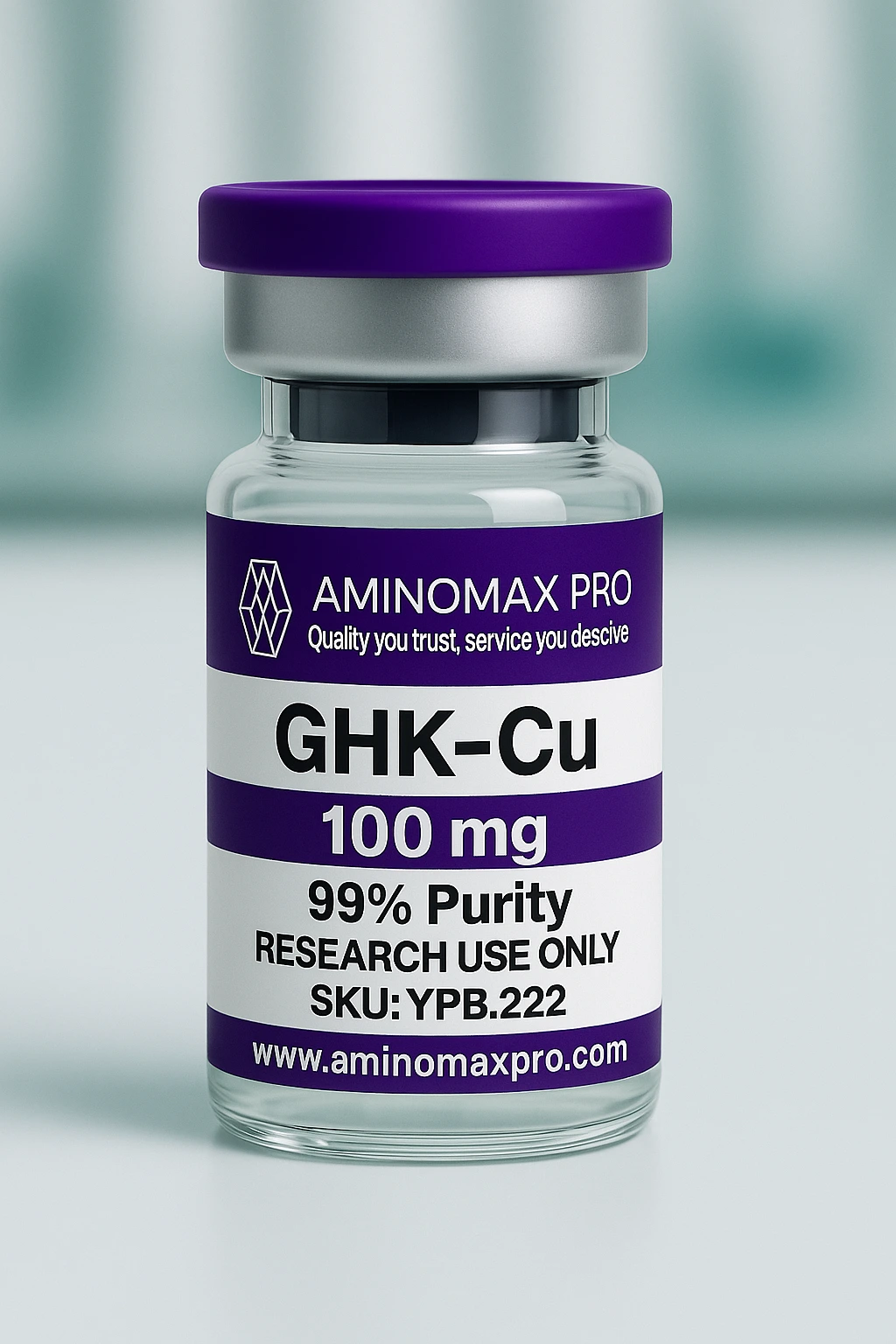
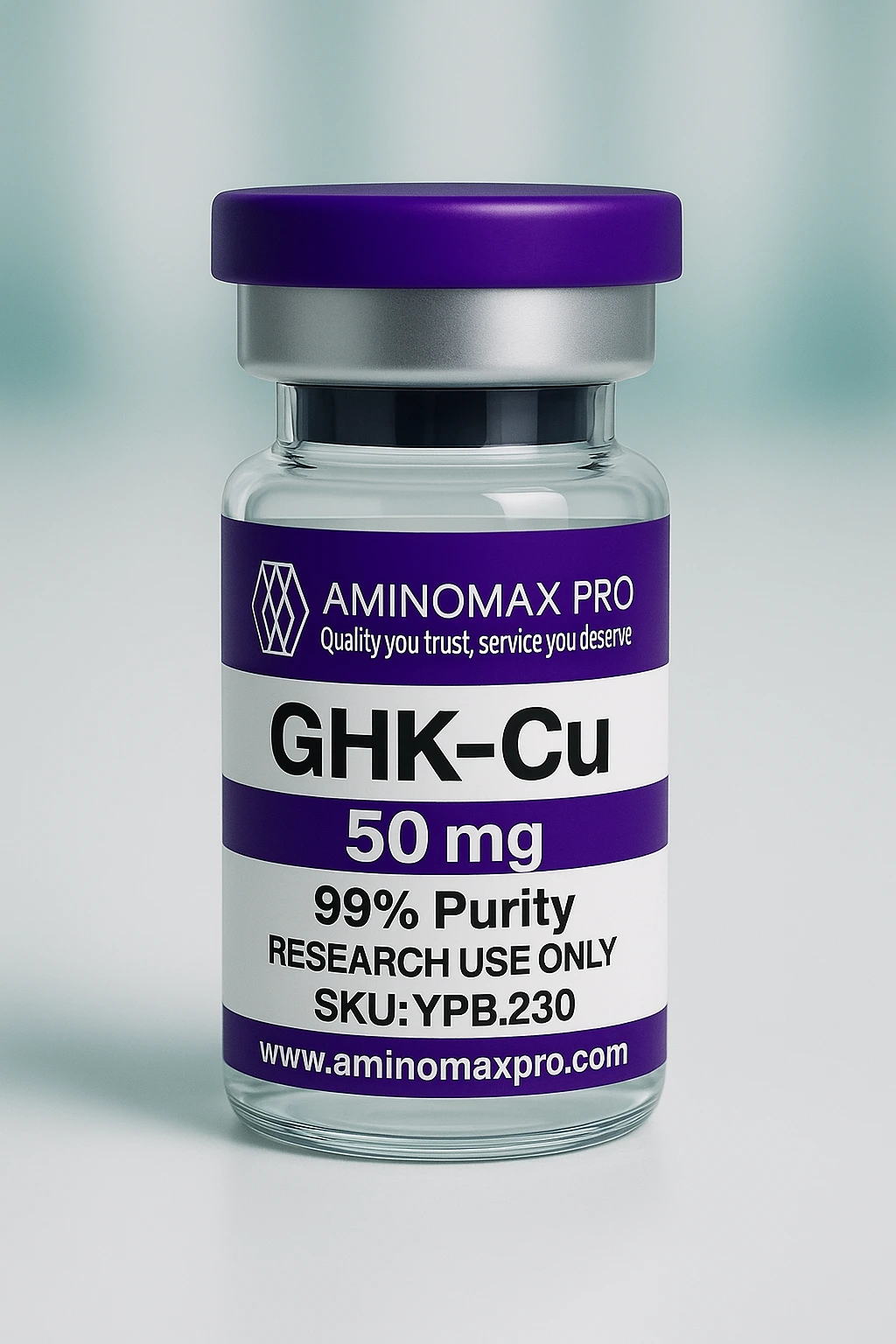
| Size | 50Mg, 100Mg |
|---|
Reviews
There are no reviews yet.