
🇺🇸 USA Sources • Bulk Savings: 5% OFF when you buy 5 • 10% OFF when you buy 10+ • Free Shipping on Orders Over $250! Shipping only in USA 🇺🇸 USA Sources • Bulk Savings: 5% OFF when you buy 5 • 10% OFF when you buy 10+ • Free Shipping on Orders Over $250! Shipping only in USA
( 0 out of 5 )

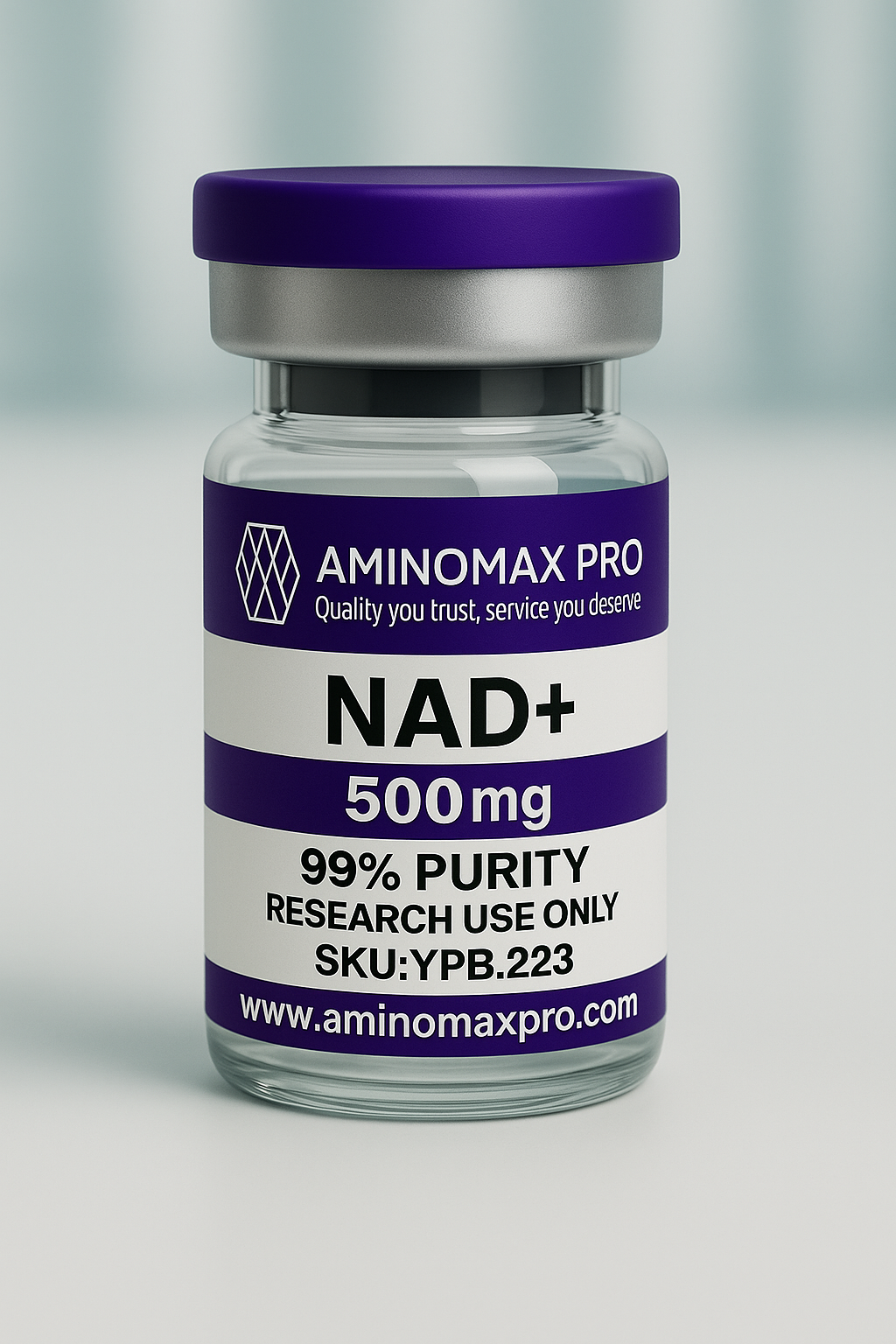
NAD+ (500mg)

Price range: $200.00 through $300.00

Product Usage Disclaimer 

This material is supplied exclusively as a laboratory research chemical for in vitro scientific study. All descriptions and are provided for informational and educational purposes only.

This compound is not approved for human or animal consumption, injection, ingestion, inhalation, topical use, or any other biological application. It must be handled only by qualified, trained personnel in a properly equipped laboratory.

This product is not a drug, supplement, food, cosmetic, or therapeutic agent, and it may not be rebranded, repackaged, or marketed as any such item. Misuse, mislabeling, or unauthorized application is strictly prohibited.

Nothing on this website constitutes medical advice, professional guidance, or a recommendation of use.

Clear
-
+
Add to Wishlist
Add to Wishlist
Add to Wishlist
Add to Wishlist

Description

NAD⁺ – Technical Biochemical Profile

(Oxidized pyridine nucleotide; redox cofactor; substrate for sirtuins, PARPs, and CD38-family enzymes)

NAD⁺ is an essential dinucleotide involved in electron transfer, cellular energy metabolism, and post-translational signaling. It cycles between NAD⁺ (oxidized) and NADH (reduced), regulating oxidative phosphorylation, glycolysis, and mitochondrial ATP production.


Primary Biochemical Roles

1. Redox Cofactor

NAD⁺ accepts electrons in oxidative reactions catalyzed by:

  • GAPDH (glycolysis)

  • MDH2, IDH3, α-KGDH (TCA cycle)

  • ACADs (fatty acid β-oxidation)

  • Complex I (NADH dehydrogenase) of the electron transport chain

Result:
NADH donates electrons to the ETC → proton gradient → ATP synthesis via ATP synthase


2. Sirtuin Substrate (SIRT1–SIRT7)

Sirtuins are NAD⁺-dependent deacetylases regulating:

  • Histone deacetylation

  • Mitochondrial function

  • Oxidative metabolism

Key downstream targets:

  • PGC-1α → ↑ mitochondrial biogenesis via NRF1, NRF2, TFAM

  • FOXO1/3 → antioxidant gene induction (SOD2, CAT, GPX1)

  • p53 and NF-κB p65 → stress-response signaling


3. PARP Enzyme Substrate

NAD⁺ provides ADP-ribose units for:

  • PARP-1 and PARP-2

  • DNA damage detection

  • Base-excision repair (BER)

PARP activation recruits:

  • XRCC1

  • DNA polymerase β

  • Ligase III

Excessive PARP activity decreases NAD⁺ pools, affecting cellular energy balance.


4. CD38 / CD157 Signaling

CD38 converts NAD⁺ to:

  • cADPR

  • NAADP

These regulate:

  • Ca²⁺ release from ER and lysosomal stores

  • Mitochondrial Ca²⁺ flux

  • Ca²⁺-dependent metabolic enzymes


Key Intracellular Pathways

Pathway Mechanism
NADH → ETC Drives oxidative phosphorylation and ATP production
SIRT1 → PGC-1α Upregulates mitochondrial biogenesis genes
SIRT3 (mitochondrial) Deacetylates SOD2, IDH2, LCAD → antioxidant and metabolic effects
PARP → BER DNA Repair Maintains genomic stability
cADPR signaling Ca²⁺ mobilization and metabolic regulation

Representative Gene Targets

Functional Area Genes Commonly Upregulated / Assessed
Mitochondrial biogenesis PPARGC1A (PGC-1α), NRF1, TFAM
Antioxidant enzymes SOD2, CAT, GPX1
DNA repair PARP1, XRCC1, LIG3, POLB
Metabolic regulation CPT1B, ACADL, PPARA
Stress response FOXO1, FOXO3, SIRT1

Mechanistic Summary

  • Central electron carrier in oxidative metabolism

  • Required substrate for sirtuin deacetylases and PARP DNA-repair enzymes

  • Supports mitochondrial gene expression, redox defense, and Ca²⁺ signaling

  • Influences metabolic transcription programs via PGC-1α, FOXO, and antioxidant pathways


Research-Only Notice

NAD⁺ is classified as a redox cofactor and metabolic research reagent.
Not approved for human or animal use, therapy, or any biological application outside controlled in-vitro research.

Additional information

Weight 1 lbs
Size

500 Mg, 1000 Mg