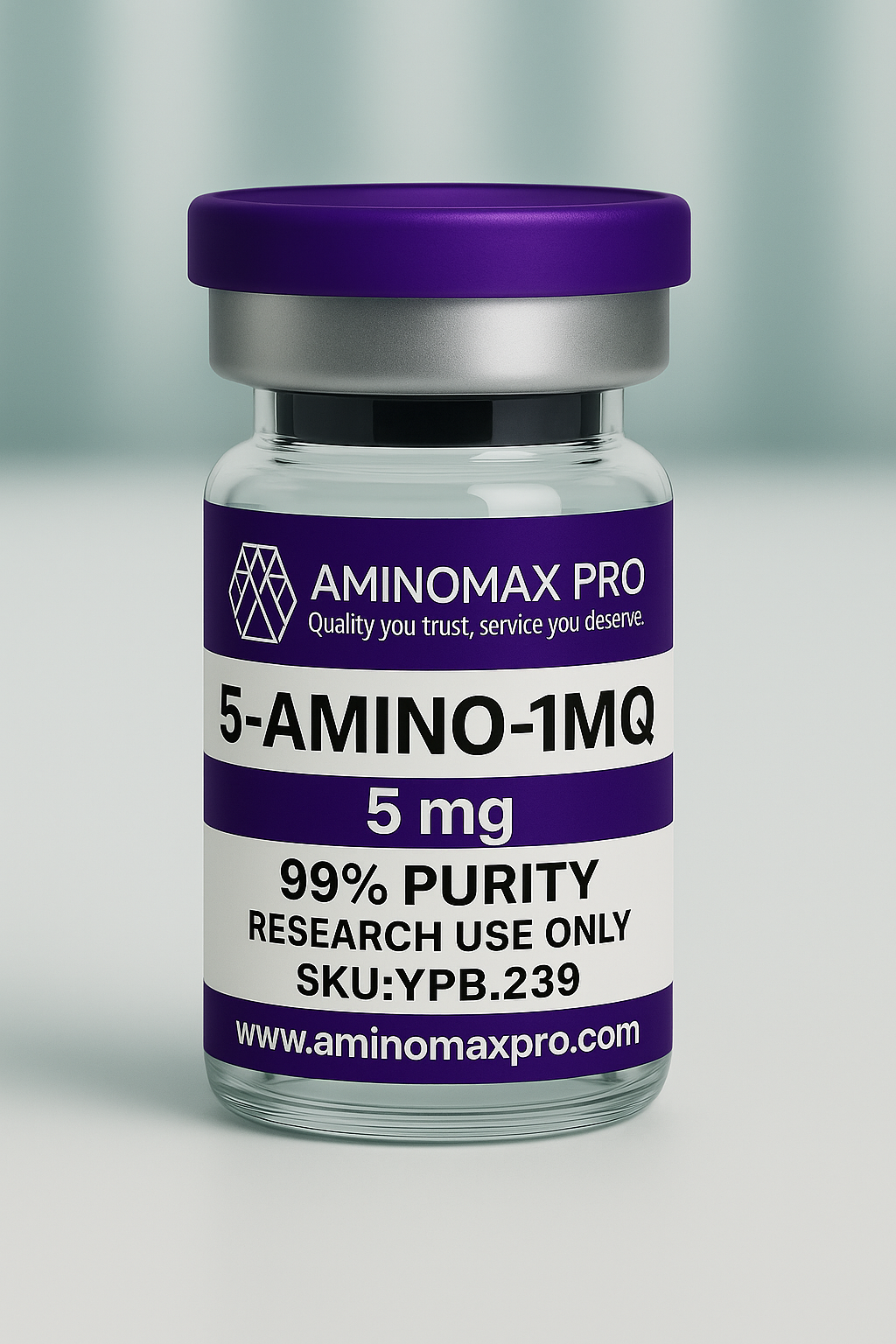
Description
5-Amino-1MQ – Technical Biochemical Mechanism Profile
(Small-molecule NNMT inhibitor; NAD⁺/SAM pathway modulator – research use only)
5-Amino-1MQ is a small-molecule inhibitor of Nicotine Amide N-Methyltransferase (NNMT), an enzyme that catalyzes the methylation of nicotinamide to form 1-methylnicotinamide (MNA) using S-adenosyl-methionine (SAM) as a methyl donor.
Inhibition of NNMT alters NAD⁺ salvage, SAM availability, methyl donor balance, and downstream transcriptional programs linked to cellular metabolism.
✅ 1. Primary Molecular Target
NNMT (Nicotinamide N-Methyltransferase)
-
Cytosolic enzyme regulating nicotinamide → 1-methylnicotinamide
-
Consumes SAM and produces S-adenosylhomocysteine (SAH)
5-Amino-1MQ binding results in:
-
Reduced formation of MNA
-
Increased intracellular nicotinamide
-
Preservation of SAM pools
-
Enhanced NAD⁺ salvage pathway flux
✅ 2. Core Metabolic Pathways Affected
A. NAD⁺ Salvage Pathway
With NNMT suppressed, more nicotinamide enters:
-
NAMPT → NMNAT → NAD⁺ synthesis
In vitro models demonstrate:
-
↑ NAMPT activity
-
↑ NAD⁺ availability
-
Potential shifts in SIRT-dependent transcription
Key enzyme targets measured:
-
NAMPT
-
NMNAT1–3
-
SIRT1 / SIRT3 (NAD⁺-dependent deacetylases)
B. SAM/SAH & Methyl Donor Balance
By reducing NNMT activity:
-
SAM is preserved
-
SAH formation decreases
-
Impacts cellular methylation potential
This shifts histone and DNA methylation status in research cultures.
Gene classes affected:
-
Chromatin modulators (DNMT1, EZH2)
-
Metabolic regulators (PPARG, SREBF1)
C. AMPK / SIRT Crosstalk
Increased NAD⁺ availability can influence:
-
SIRT1 → PGC-1α activation
-
AMPK phosphorylation
These pathways regulate mitochondrial and metabolic genes.
Representative downstream genes:
-
PPARGC1A (PGC-1α)
-
NRF1
-
TFAM
-
CPT1B, ACADL (fatty-acid oxidation)
✅ 3. Secondary Signaling Pathways
| Pathway | Effect in in-vitro models |
|---|---|
| mTOR | Can be down-regulated via AMPK signaling |
| FOXO family | Deacetylation via SIRT1 (gene expression changes) |
| JAK/STAT | Altered cytokine gene transcription in some cell types |
| NF-κB | Potential reduction in inflammatory transcriptional activity |
✅ 4. Representative Gene Targets
| Functional Group | Example Genes Tracked |
|---|---|
| NAD⁺ Salvage | NAMPT, NMNAT1-3, SIRT1, SIRT3 |
| Mitochondrial & Oxidative | PGC-1α, NRF1, TFAM, SOD2 |
| Metabolic Regulators | PPARG, CPT1B, ACADL, PDK4 |
| Chromatin/Methylation | DNMT1, EZH2, HDACs |
| Inflammatory Signaling | IL6, IL1B, TNFA, NFKB1 |
✅ 5. Key Enzymes Affected
| Enzyme | Mechanistic Relevance |
|---|---|
| NNMT | Primary inhibition target |
| NAMPT | Nicotinamide → NMN conversion |
| NMNAT | NMN → NAD⁺ formation |
| SIRT1/SIRT3 | NAD⁺-dependent transcriptional regulators |
| DNMT/EZH2 | Chromatin methylation enzymes |
✅ Second Messengers
| Messenger | Mechanistic Contribution |
|---|---|
| NAD⁺ | Cofactor for sirtuins & deacetylases |
| SAM | DNA/histone methylation capacity |
| AMPK | Metabolic homeostasis |
✅ Mechanistic Summary
-
5-Amino-1MQ inhibits NNMT
-
Lowers conversion of nicotinamide → MNA
-
Preserves SAM and supports NAD⁺ salvage
-
Modulates SIRT1/AMPK/PGC-1α signaling
-
Alters transcription of metabolic, chromatin, and stress-response genes
Research-Only Classification
5-Amino-1MQ is supplied exclusively for controlled in-vitro laboratory research.
Not approved for human or animal administration, therapeutic use, or any biological application outside research environments.